Community, Belonging, and Resilience: Insights from the Roundtables on Trauma in Local Authorities
- Hagar Dotan
- 7 days ago
- 4 min read

At the Hof HaCarmel conference on national trauma, for local municipalities representatives, the conversation among the roundtables kept returning to a deceptively simple question: when trauma strikes a community, what is the role of local municipalities when dealing with national trauma?
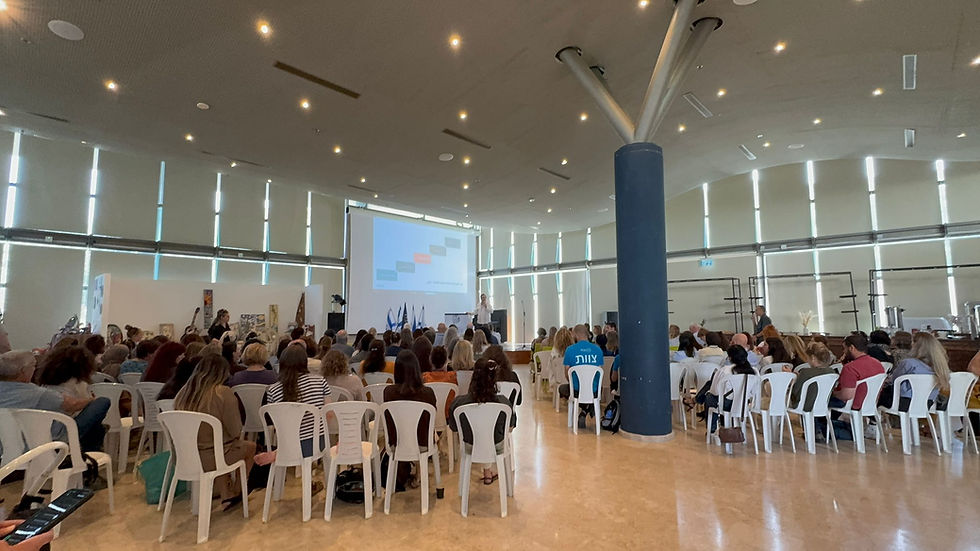
The participants came from local authorities, welfare and education departments, psychological services, health clusters, government agencies, civil society organizations, and community resilience initiatives. Their examples varied, but the pattern was clear. Trauma response cannot begin only after the emergency. It depends on the relationships, habits, trust, and practical infrastructure that already exist in ordinary times.
One participant captured this shift with a metaphor that stayed with the group: the goal is to move “from putting out fires” to “watering the garden and growth.” In other words, the work is not only crisis intervention. It is the slow, ongoing cultivation of belonging, visibility, and shared responsibility.
Several participants described what had worked well. In regional councils and smaller communities, existing emergency teams, informal education systems, welfare departments, and community volunteers created a first layer of response. In one example, a community with a shared language and clear roles was able to set up a field school for 200 students within two days. Others spoke about the strength of Community Resilience Team (צח״י), local volunteer networks, and direct relationships between welfare workers, hospitals, and the National Insurance Institute.
The most effective responses seemed to rely less on formal hierarchy and more on trusted human connections. As one welfare participant described, the ability to “pick up the phone and know who you are speaking to” made things move. A National Insurance Institute representative similarly emphasized that direct relationships with local welfare departments and hospitals helped remove barriers: there was no hesitation in calling a local authority and saying, in effect, we know someone has been through a traumatic event and we can help.
While community was recognized as essential, the discussion also acknowledged its limitations. Participants repeatedly named the gaps: limited staff, fragmented data, unclear responsibilities, bureaucratic delays, stigma, and the difficulty of finding people who are “quietly” suffering. Several people spoke about “transparent” populations: people who look functional, do not ask for help, or avoid official channels because of shame, distrust, or exhaustion.
This was especially clear in the discussion of youth, families of reservists, people with PTSD, bereaved families, Arab communities, evacuees, and those experiencing social isolation. One participant noted that youth today are facing significant loneliness and a reduced sense of belonging. Another described how a child or family may appear “normal” within school or community systems, while already being close to collapse. The challenge is to identify such needs before they become emergencies.
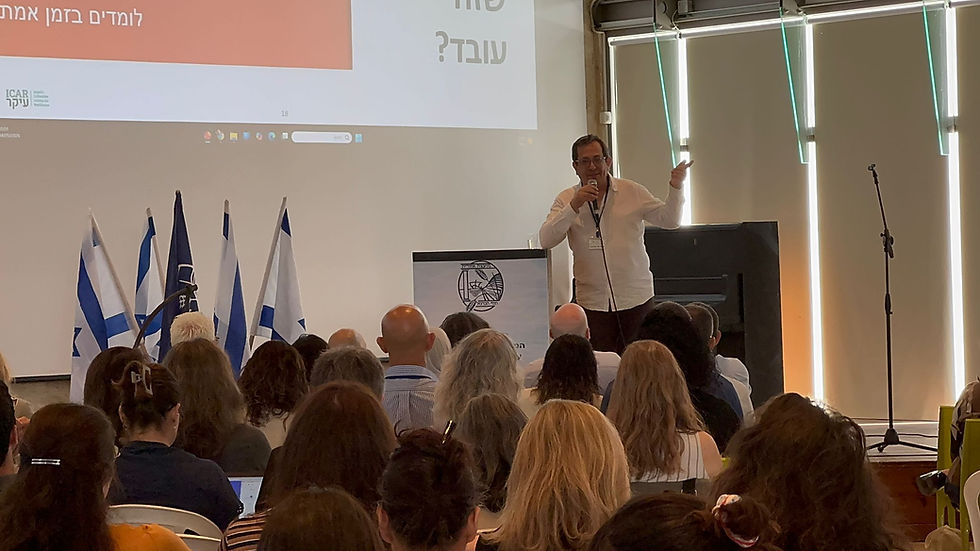
Participants also distinguished between different kinds of responses. Some spoke about clinical care, trauma-informed treatment, and the shortage of psychiatrists, psychologists, and social workers. Others focused on community belonging: youth movements, informal education, neighborhood WhatsApp groups, school-based networks, parent circles, movement and sports, shared meals, and local gathering places. These were not presented as substitutes for treatment, but as complementary forms of early support and prevention.
One participant from informal education put it plainly: where there are good youth counselors who see the children, systems can open immediately near shelters or community spaces after an emergency. Children then do not go through the experience alone; they have a group, belonging, and a route back. This model may be easier in rural or communal settings, but the group suggested that cities could adapt it through neighborhoods, buildings, or smaller community units.
The role of the local authority emerged as both central and overburdened. Participants described the municipality or regional council as the body closest to residents, but not always equipped to coordinate everything placed on its shoulders. One participant observed that in routine times, everything tends to drain toward welfare departments, while other departments or ministries pass responsibility along. In emergencies, everyone suddenly wants to be involved. The problem is that without shared routines, clear protocols, and cross-departmental cooperation, the response becomes improvised at exactly the moment when people need clarity.
The group therefore returned again and again to infrastructure: shared work procedures, inter-ministerial coordination, training, data-sharing, trauma-informed service providers, and local mechanisms that can operate before, during, and after a crisis. Several participants called for more “resilience trustees” or trained community figures who can recognize distress, offer initial support, and connect people to help. Others imagined local volunteer centers, regional mental-health response centers, or municipal bodies that integrate formal and informal support.
There was also a strong call to care for the caregivers. Social workers, teachers, therapists, municipal staff, and volunteers are themselves exhausted. One table proposed creating “charging stations for supporters” — spaces and systems that sustain the people who sustain others. Another participant described the staff as “tired, worn down, exhausted,” with some local authorities carrying major staffing vacancies. Without better employment conditions, supervision, emotional support, and practical relief, the system’s human infrastructure will continue to erode.
The roundtable also surfaced the importance of culture, trust, and equity. Participants from Arab communities described low-resourced authorities, lack of protected spaces, budget cuts, and a widening trust gap between residents and the state. Others emphasized culturally adapted community resilience models, including dedicated resilience centers for Arab society and responses that do not assume one model fits all communities.
What made the discussion distinctive was its refusal to separate “mental health” from everyday civic life. Trauma response was described not only as therapy, but as transportation, employment, school routines, trusted adults, local leadership, and volunteer coordination. One participant added that the first thing a local authority should do after a traumatic event is gather the community, build a shared narrative, and look forward.
The main takeaway was practical and demanding: local trauma response must be built in routine, not invented in an emergency. Communities need flexible systems, but flexibility depends on prior relationships. They need professional care, but also social belonging. They need data, but also people who notice when someone disappears. They need national support, but also local authority to move quickly and reduce bureaucracy.
Perhaps the strongest conclusion came through a sentence that could serve as the roundtable’s guiding principle: “People should not fall without someone seeing them.” The broader field can take from this a clear direction. Trauma-informed systems are not built only in clinics. They are built in schools, neighborhoods, welfare offices, youth groups, volunteer networks, and municipal routines — wherever people can be seen before they are lost.


Comments